Русский
 中文
 España
In aggregate production and mineral processing plants, processing a mixture of soft rocks (such as limestone, dolomite, and soft sandstone) and hard rocks (such as granite, basalt, quartz, and metallic ores) presents a unique technical challenge. Soft rocks tend to generate excessive dust and fines when over-crushed, while hard rocks cause severe liner wear and demand high crushing force.
To achieve maximum throughput, optimal cubic particle shape, and balanced liner wear, selecting the correct cone crusher cavity (crushing chamber) across secondary and tertiary stages is critical. Zhongxin Heavy Industry shares industry-proven configuration guidelines for optimizing cone crusher performance in mixed-rock crushing circuits.
1. Classification of Soft vs. Hard Rocks in Mining & Aggregates
Understanding the raw material behavior helps engineers configure the ideal crushing chamber:
Soft Rocks (Limestone, Dolomite, Calcite): Easily fractured, lower crushing power requirement, but prone to over-crushing and high fine/dust generation.
Hard Rocks (Granite, Basalt, Quartzite, Ores): High compressive strength, lower dust ratio, but causes high abrasive wear on mantle and concave liners.
Design Principle: In mixed-rock circuits, never choose an overly large feed cavity based purely on soft rock, nor an undersized cavity based solely on hard rock. Balance feed size acceptance with crushing ratio.
2. Step-by-Step Cone Crusher Cavity Selection Strategy
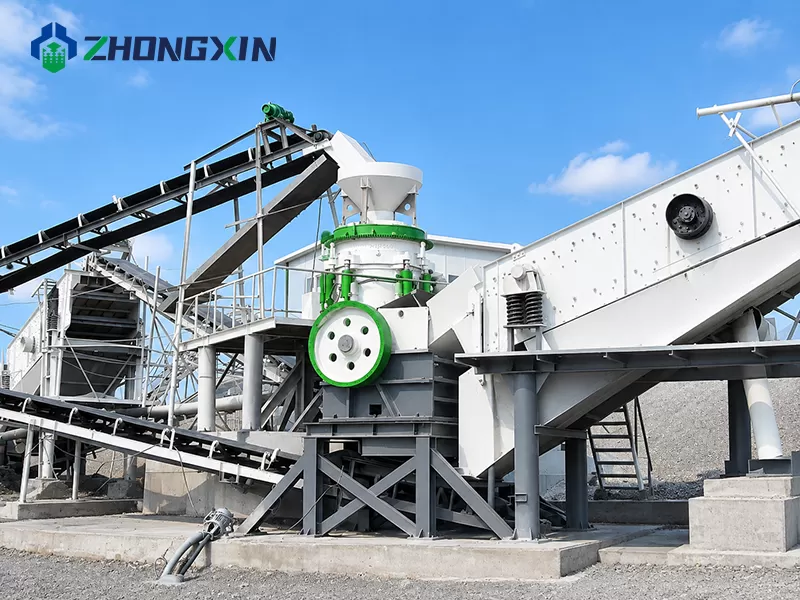
A standard multi-stage crushing line follows this sequence: Primary Jaw Crusher →Secondary Cone Crusher→ Vibrating Screen→ Tertiary Fine Cone Crusher (Closed Circuit) → Final Aggregate Products.
| Crushing Stage | Recommended Crusher Type | Recommended Cavity Type | Key Engineering Objective |
| Stage 1: Primary | Jaw Crusher (PE Series / ZXC Series) | Standard Jaw Chamber | Output size controlled below 300mm – 350mm |
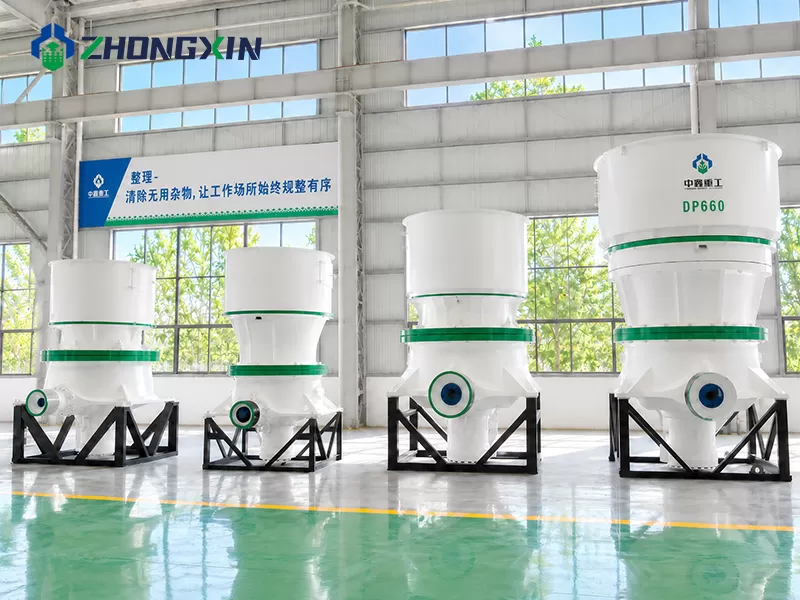
| Stage 2: Secondary | Medium Cone Crusher | Coarse Cavity (C) | High throughput, avoids soft rock over-crushing |
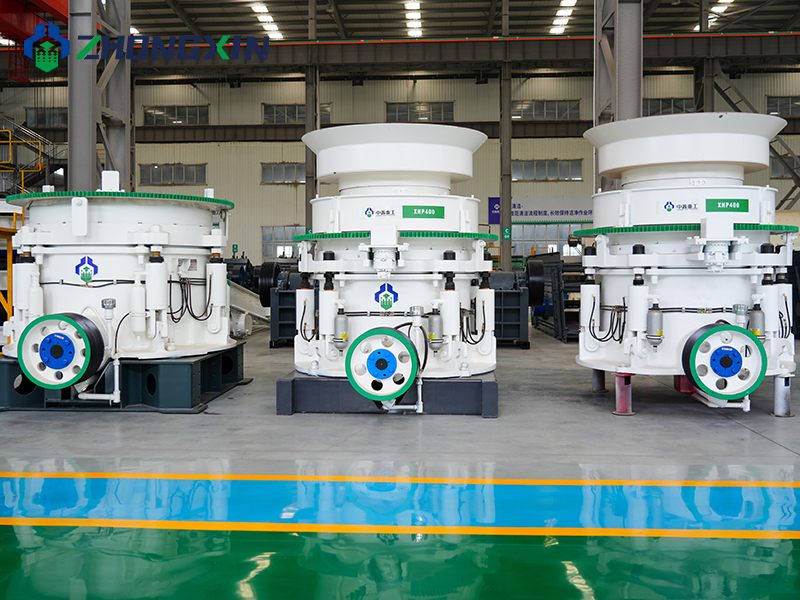
| Stage 3: Tertiary | Fine Cone Crusher | Medium Cavity (M) | Balanced parallel zone for cubic shape & low dust |
Stage 1: Primary Jaw Crusher Selection
For Capacity < 200 TPH: Traditional PE Series Jaw Crushers are cost-effective. Closing the discharge opening (CSS) yields smaller feed sizes for secondary crushing.
For Capacity > 200 TPH: European C Series Jaw Crushers are recommended due to larger feed acceptance, higher crushing ratio, and smaller discharge sizes (strictly controlled below 300–350mm).
Stage 2: Secondary Cone Crusher Cavity Selection
The secondary cone crusher acts as the bridge in the crushing circuit. When accepting feed sizes under 350mm:
Recommended Choice: Coarse Cavity (C).
Why Avoid Extra-Coarse Cavity (EC)? Extra-coarse chambers accept huge rocks but allow soft fines to pass through without crushing ("flushing"), resulting in poor flaky particle shapes. A Coarse Cavity maintains sufficient throughput, squeezes hard rocks effectively, and prevents excessive dust from soft rocks.
Stage 3: Tertiary Fine Cone Crusher Cavity Selection
Material screened above 31.5mm is fed back into the tertiary fine cone crusher (feed size usually under 120mm):
Recommended Choice: Medium Cavity (M) within the Fine Series.
Why Medium Cavity? A Medium Cavity features a balanced parallel zone length. It provides shaping capability for hard rock fractions while preventing soft rocks from being pulverized into unwanted powder—achieving the perfect balance between capacity and product gradation.
3. High-Purity Premium Aggregate Upgrade (Optional)
For standard road base and concrete aggregate, the three-stage crushing circuit produces ready-to-use materials. If your project demands premium cubic aggregates for high-speed railways or asphalt mixing plants, a VSI Vertical Shaft Impact Crusher (Sand Making & Shaping Machine) can be added post-screening for final shaping.
FAQ
Q: Why shouldn't I use a Fine Cavity (F) for secondary cone crushing of mixed rocks?
A: A Fine Cavity in the secondary stage severely restricts the maximum feed size, causing frequent bridging or choking at the feed opening. It also causes over-grinding of soft rock portions, increasing dust content significantly.
Q: How does Zhongxin Heavy Industry customize crushing circuits for specific rock ratios?
A: Zhongxin engineers adjust cavity choke points, eccentric throws, and motor speeds based on four core project variables: hourly output target (TPH), primary crusher output size, required final aggregate fractions, and the exact ratio of soft-to-hard rock.
Get a Customized Crushing Line Configuration
Are you planning a new crushing plant or upgrading your existing circuit? Contact Zhongxin Heavy Industry with your project parameters:
Target capacity (TPH / Tons Per Hour)
Maximum feed size from primary jaw crusher
Required final aggregate sizes (e.g., 0-5mm, 5-10mm, 10-20mm, 20-31.5mm)
Ratio of soft rock to hard rock in your quarry
Our engineering team will design a optimized crusher cavity layout tailored to your site conditions.
Email: sales@zxcrusher.com
Website: https://www.zxcrusher.com
WhatsApp / WeChat: +86 13676922906