Русский
 中文
中文 España
When processing ultra-hard materials such as granite and basalt—characterized by a Protodyakonov hardness of 15–18 and a compressive strength exceeding 200 MPa—how can you scientifically configure your crushing circuit? Drawing on years of field experience in heavy industrial manufacturing, Zhongxin Heavy Industry breaks down three mainstream equipment selection strategies to help you achieve the ultimate balance among production capacity, particle shape, and operational costs.
Three Mainstream Crushing Circuit Configurations
1. Two-Stage Crushing Process: Jaw Crusher + Single-Cylinder Cone Crusher + Multi-Cylinder Hydraulic Cone Crusher
-
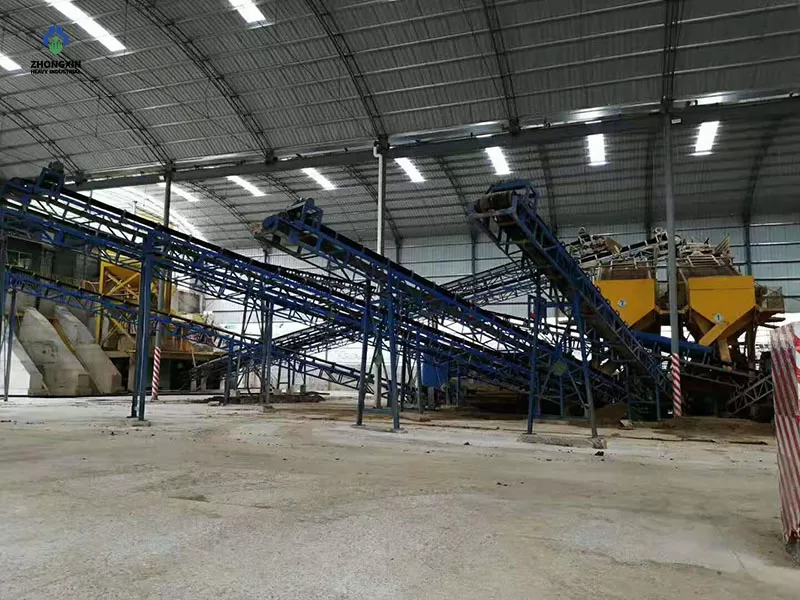
Primary Stage (Jaw Crusher): Features a large feed opening capable of handling boulders up to 850mm. It utilizes compressive crushing for high wear resistance, stable overload protection, and low failure rates. A single unit easily handles 500 TPH (tons per hour) of primary feed with simple maintenance. Note: Output contains a higher percentage of flaky particles, suitable only as semi-finished products or sub-base materials.
-
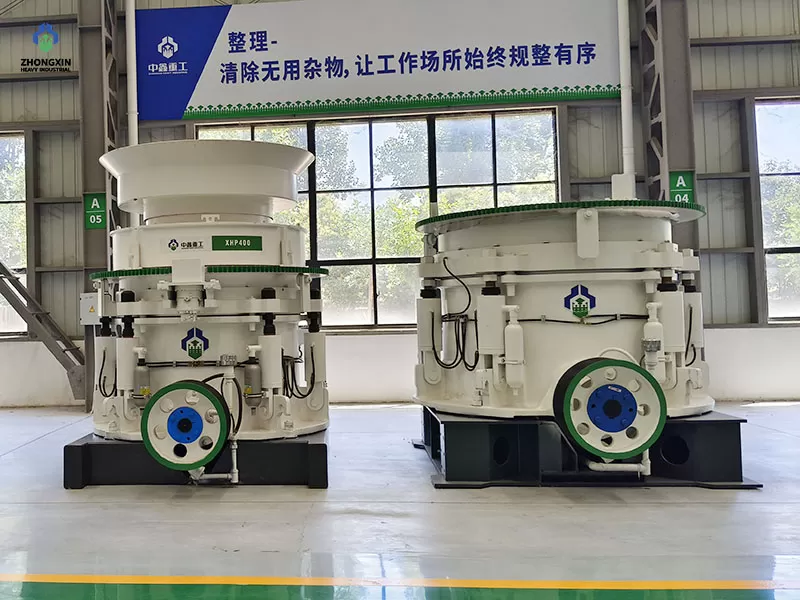
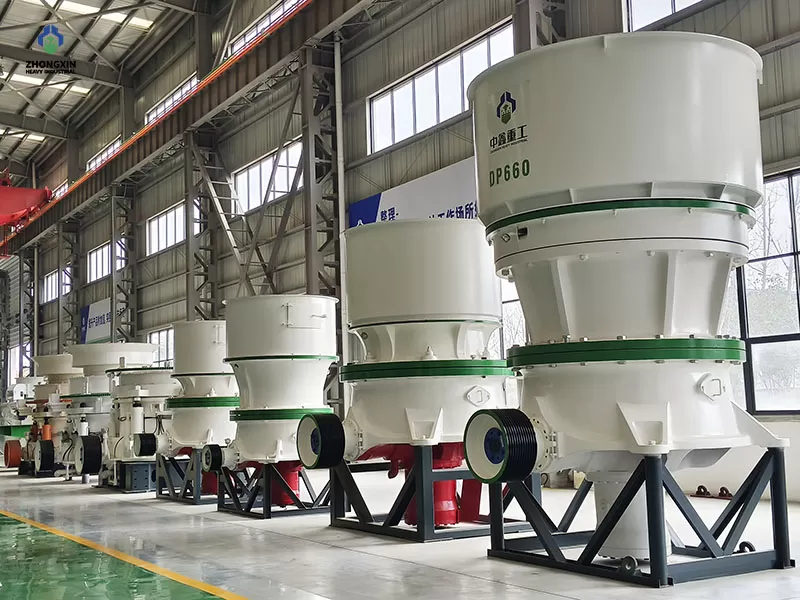
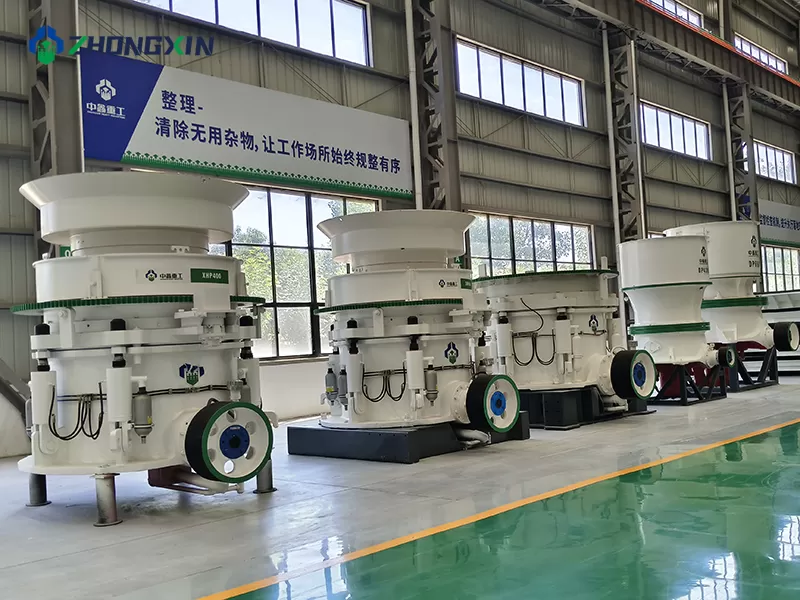
Secondary & Tertiary Stage (Hydraulic Cone Crushers): Employs inter-particle lamination crushing. The manganese steel mantle and concaves experience significantly lower wear than impact breaker blow bars, ensuring steady output, fewer flaky particles, excellent aggregate grading, and continuous high-volume production. Note: Involves a higher initial capital investment.
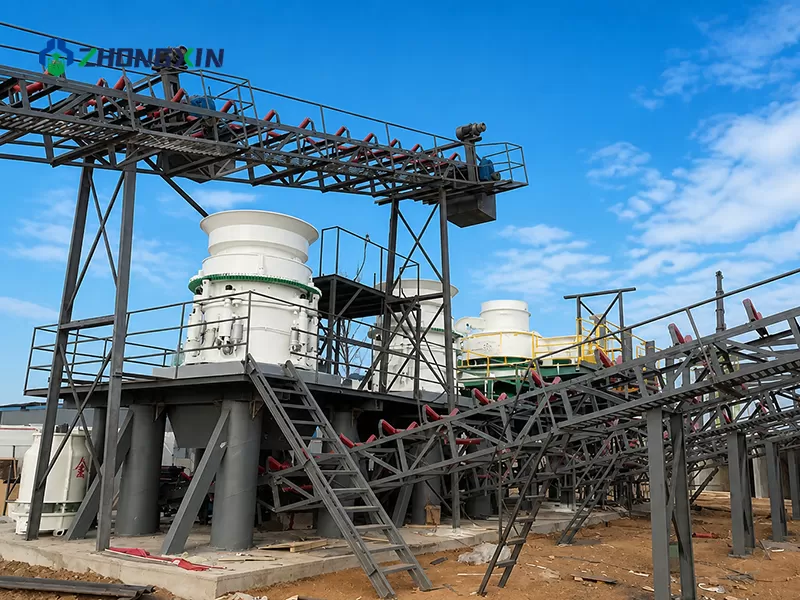
2. Three-Stage Crushing & Shaping Process: Jaw Crusher + Single-Cylinder Cone Crusher + Multi-Cylinder Cone Crusher + VSI Crusher
-
Primary & Secondary Stages (Jaw & Cone Crushers): The heavy-duty jaw crusher acts as the primary reducer, followed by high-performance single-cylinder and multi-cylinder cone crushers to deliver high-capacity, reliable secondary reduction of hard granite and basalt.
-
Tertiary Stage (VSI Vertical Shaft Impact Crusher): Acts as the shaping stage utilizing "stone-on-stone" or "stone-on-iron" impact technology to minimize wear. It produces high-quality cubical aggregates with superior particle shape, perfectly meeting strict standards for high-speed rail, highway bridges, and high-grade concrete projects.
3. Traditional Process: Jaw Crusher + Impact Crusher (Strictly for Soft Rocks Under 120 MPa)
-
Primary Stage (Jaw Crusher): Handles initial large-feed reduction up to 850mm.
-
Secondary Stage (Impact Crusher): Relies on high-speed blow bars for impact breakage. While it yields good particle shapes and a simplified layout, quartz particles in granite and basalt will rapidly wear down the blow bars. Pros: Good particle shape, simpler layout. Cons: High wear-part consumption, short service life, and high operating costs for hard rock applications.
Summary & Expert Recommendation
Based on a comprehensive comparison of the three solutions above, we conclude:
-
Long-Term Stability & Cost-Efficiency: Jaw crusher+ Single-Cylinder Cone crusher+ Multi-Cylinder Cone Crushers. Best for low wear, stable operation, and lowest cost per ton.
-
Premium Aggregates & Sand Making: Jaw crusher+ Cone Crushers + VSI Crusher. Best for high-end engineering standards requiring flawless cubical shape.
-
Soft Rock, Weathered Stone, or Temporary Road-Base Projects: Jaw crusher+ Impact Crusher. Simple flow, but high consumable costs must be factored in.
Partner with Zhongxin Heavy Industry
Zhongxin Heavy Industry brings extensive practical experience in hard rock crushing plants worldwide. We provide turnkey services—from material analysis and site evaluation to equipment selection, installation, and after-sales maintenance.
Looking for a precise, customized 500 TPH crushing solution? Contact our engineering team today!
-
Website: https://www.zxcrusher.com/case/
-
WhatsApp: +86 136 7692 2906
-
Email: [email protected]