Русский
 中文
 España
Zhongxin Heavy Industrial Machinery Co.,Ltd.
Review turnkey mineral processing and gold recovery plant installations engineered by Zhongxin Heavy. Detailed case studies cover gold CIP/CIL cyanidation lines, copper ore flotation circuits, iron ore magnetic separation, and gravity concentration systems—complete with process flowsheets, equipment configurations, and verified mineral recovery rates.
Zhongxin Heavy Industry designs and manufactures 100–200 TPD manganese ore washing and gravity separation plants engineered for clay-bearing and lateritic manganese deposits. Integrating jaw crushing, rotary trommel scrubbing, vibrating screening, and mineral jigging, this chemical-free beneficiation circuit effectively removes sticky mud and silica gangue to upgrade manganese grade from 22%–28% to 38%–45%+ Mn with >80% closed-circuit water recycling.


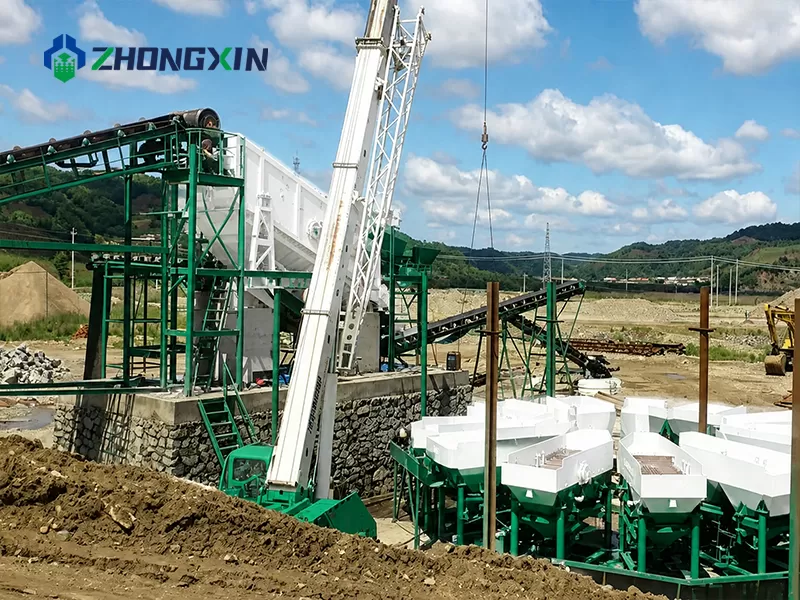
Zhongxin Heavy Industry designs, manufactures, and supplies 100–200 TPD manganese ore washing and gravity separation plants built specifically for small- and medium-scale mining operations processing alluvial, eluvial, and clay-rich manganese ores. By combining two-stage crushing, heavy-duty rotary trommel scrubbing, multi-deck screening, and mineral jigging, this turnkey beneficiation circuit effectively strips sticky mud and siliceous gangue without chemical reagents, upgrading low-grade run-of-mine (ROM) feed into marketable metallurgical-grade manganese concentrate.
◎Application Scope: Alluvial, Residual, and Clay-Bearing Manganese Deposits
◎Raw Material Processed: Low-Grade Manganese Ore (Pyrolusite, Psilomelane, Manganite with High Clay Content)
◎Processing Capacity: 100–200 TPD (Standard 150 TPD configuration, modularly scalable)
◎Feed Grade vs. Concentrate Grade: Feed 22%–28% Mn upgraded to 38%–45%+ Mn (subject to ore mineralogy)
◎Core Beneficiation Method: Physical Scrubbing + Screening + Gravity Separation (No Chemical Reagents)
◎Water Recycling Rate: >80% via Thickener / Settling Pond Recirculation
◎Manufacturer: Zhongxin Heavy Industry
Key Operational Challenges in Clay-Rich Manganese Ore Processing
Operators developing 100–200 TPD manganese beneficiation projects frequently encounter four major technical bottlenecks when dealing with weathered or muddy ore bodies:
◎High Clay and Silt Coating: Sticky lateritic clay encapsulates manganese lumps, blinding crusher chambers and screen decks while lowering final concentrate grade below smelter specifications.
◎Wide Particle Size Distribution: Run-of-mine manganese typically contains coarse lumps, medium gravel, and fine grains, requiring staged sizing so each fraction enters the optimal gravity separator.
◎Excessive Fines Loss: Uncontrolled washing can flush fine manganese particles into tailings ponds if desliming and fine-jigging stages are not properly balanced.
◎Water Scarcity and Power Constraints: Many remote manganese sites operate with limited fresh water supply and require rugged, low-power mechanical circuits rather than energy-intensive grinding mills.
| Process Stage | Main Equipment | Operational Function in Circuit | Technical Advantages for Manganese Ore |
| 1. Feeding & Crushing | Vibrating Feeder +Jaw Crushers | Primary & secondary size reduction of ROM ore | High manganese steel jaws resist abrasive silica |
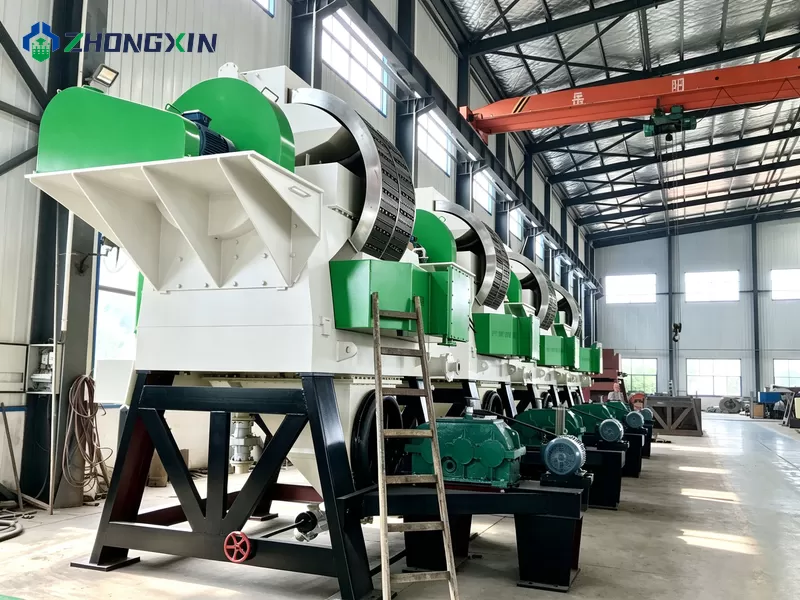
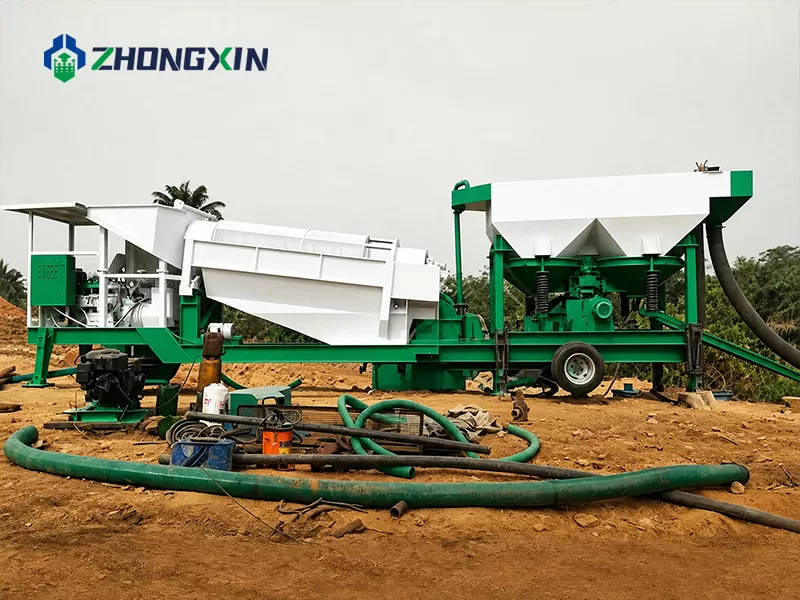
| 2. Washing & Scrubbing | Heavy-Duty Rotary Trommel Scrubber | Clay disintegration, attrition washing & sizing | High-pressure spray bars strip sticky laterite mud |
| 3. Screening | Circular Vibrating Screen (Multi-Deck) | Splits washed ore into 10–30, 3–10 & 0–3 mm | Non-blinding polyurethane/manganese wire meshes |
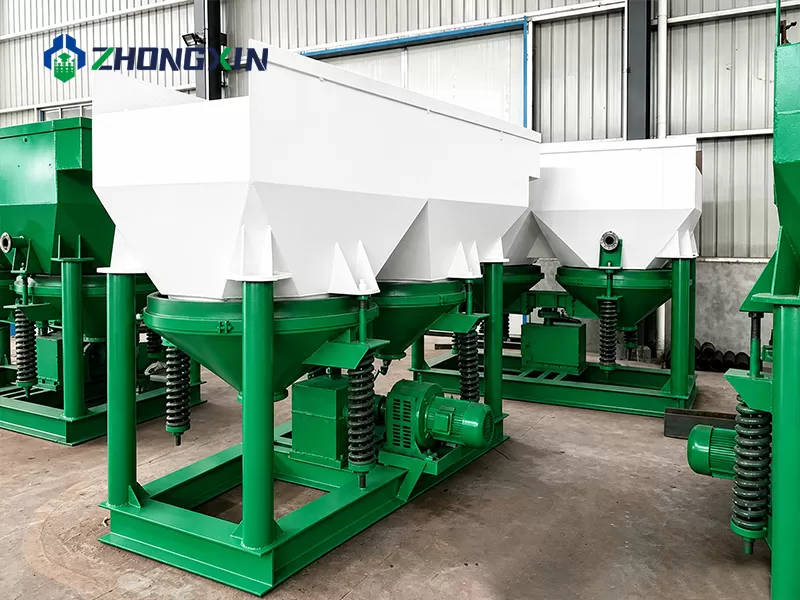
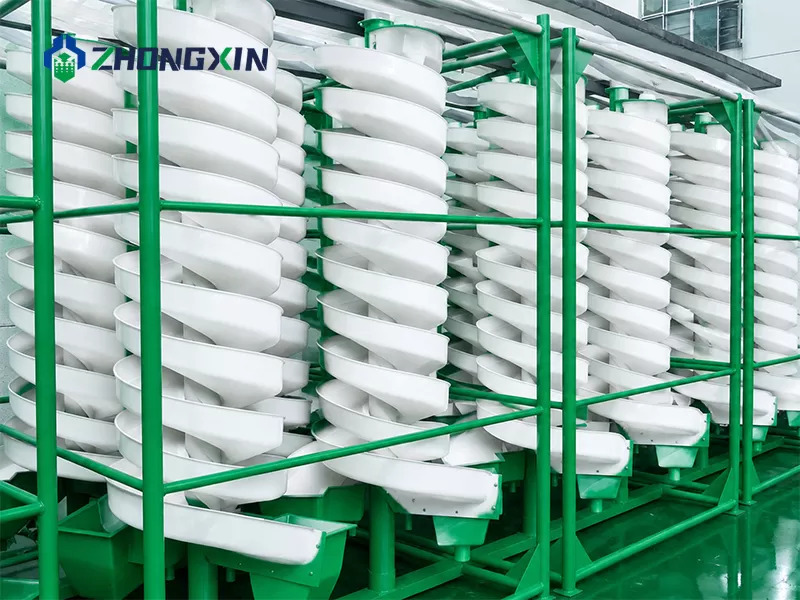
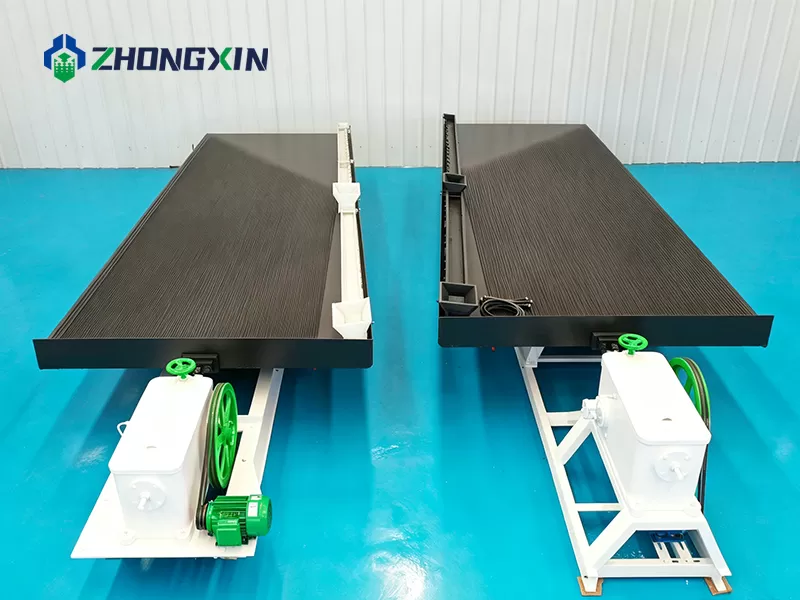
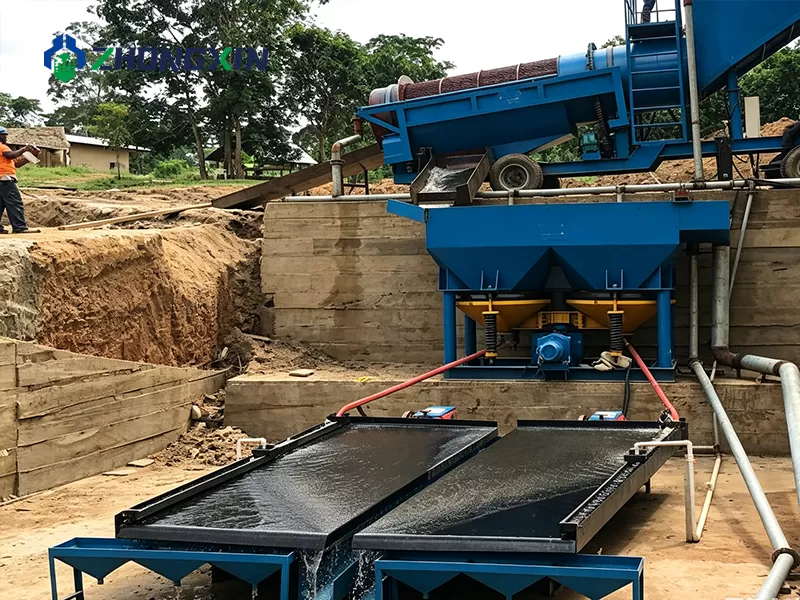
| 4. Gravity Separation | Mineral Jig Concentrators + Shaking Table | Density-based separation of coarse & fine Mn | High recovery without chemical reagents; low OPEX |
| 5. Dewatering | Linear Dewatering Screen | Moisture reduction of final Mn concentrate | Delivers stackable, transport-ready product |
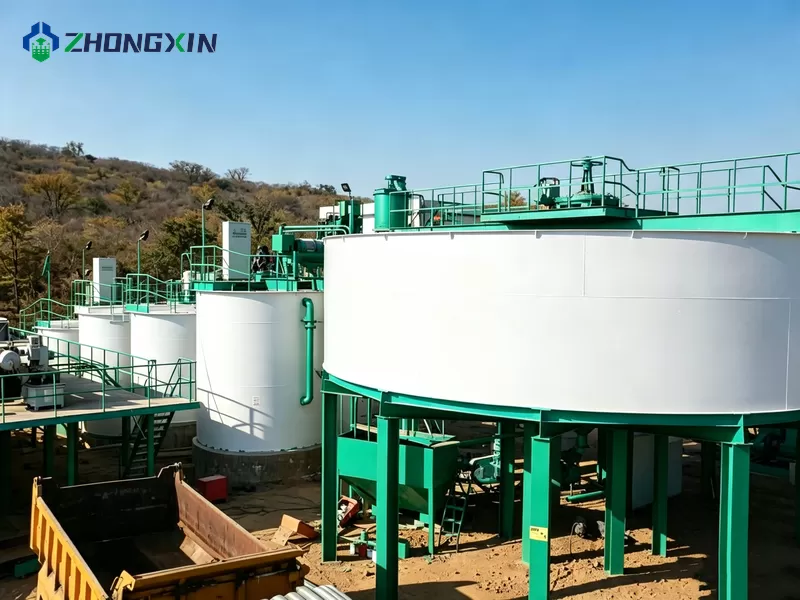
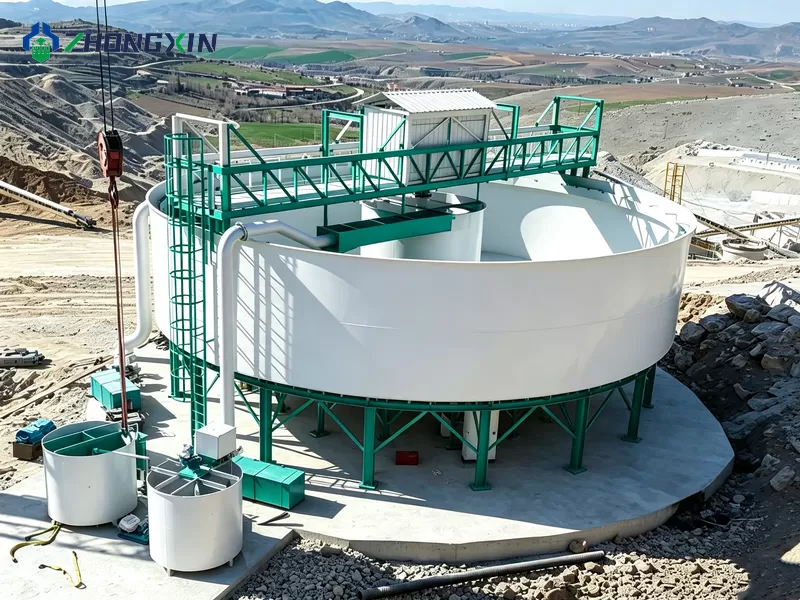
| 6. Water Recovery | Tailings Thickener + Slurry Pumps | Slime settlement & closed-circuit water reuse | Cuts fresh water consumption by >80% |
(Engineering Note: Zhongxin Heavy Industry customizes equipment sizing from 100 TPD to 200 TPD based on clay content, feed particle size, target Mn/Fe ratio, and site water availability.)
Operating Economics & Wear-Part Lifespan (Reference 150 TPD)
◎Zero Chemical Reagent Cost: 100% physical washing and gravity separation eliminates ongoing expenses for flotation collectors, frothers, or leaching chemicals.
◎Low Installed Power: Total plant installed power is typically 160–220 kW (available in 380V/415V/440V, 50Hz or 60Hz to match local grid or diesel generator specifications).
◎Durable Wear Components: High-manganese steel jaw plates (8–12 months service life), heavy-duty trommel screen liners (10–14 months), and reinforced jig rubber diaphragms (12–18 months) keep maintenance downtime minimal.
Step-by-Step Beneficiation Process Flow (5 Stages)
1. Primary Crushing and Controlled Feeding
Run-of-mine manganese ore (up to 300–350 mm) is loaded into a feed hopper and metered by a vibrating grizzly feeder into a primary jaw crusher, reducing coarse boulders to -60 mm while pre-screening loose fines.
2. Intensive Rotary Trommel Scrubbing and Desliming
The crushed ore enters a heavy-duty rotary trommel scrubber equipped with internal lifter bars and high-pressure water spray nozzles. Intense attrition breaks down stubborn clay agglomerates, washing slimes through the outer screening drum while discharging clean washed ore fractions.
3. Secondary Crushing and Multi-Deck Sizing
Washed oversize lumps are routed to a secondary fine jaw crusher (or cone crusher) to liberate intergrown silica gangue, then classified by a circular vibrating screen into narrow size bands (10–30 mm, 3–10 mm, and 0–3 mm) for high-precision gravity separation.
4. Gravity Separation via Mineral Jigs and Shaking Tables
Each sized fraction feeds dedicated mineral jig concentrators (saw-tooth wave jigs for medium/fine sizes and coarse jigs for lump ore). Utilizing the density difference between manganese minerals (3.7–4.8 g/cm3) and quartz/clay gangue (2.6–2.7 g/cm3), pulsating water stratifies and discharges high-grade manganese concentrate continuously. Fine tailings can be further scavenged on shaking tables when warranted by mineralogical testing.
5. Dewatering and Closed-Circuit Water Recovery
Clean manganese concentrate passes over a dewatering screen for direct stockpiling and truck dispatch, while slimes and jig tailings flow to a tailings thickener (or multi-stage settling system) to recover over 80% of process water back to the scrubber and jigs.
Fast Production Cycle: Standard 100–200 TPD manganese washing plants are manufactured and workshop-tested within 35–55 working days.
Seaworthy Export Packaging: All structural frames, trommel drums, jaw crushers, and jigging units are rust-proofed and loaded into standard 40'HQ / 40'OT containers with detailed packing lists and QR-coded assembly labels.
Direct Port Delivery: Regular shipments to major mining gateways including Durban, Tema, Lagos, Dar es Salaam, Mombasa, Mundra, Chennai, Jakarta, and Port Klang.
On-Site Commissioning & Training: Experienced engineers are available for installation supervision, no-load/load test runs, and local operator training.
Why Choose Zhongxin Heavy Industry for Manganese Beneficiation
Ore-Specific Flowsheet Design: We tailor scrubber retention time and jig stroke/frequency according to your ore's mud content and liberation size.
Purely Physical, Eco-Friendly Separation: Zero chemical reagents required, simplifying environmental permitting and minimizing ongoing consumable costs.
Fast Installation & Modular Skid Options: Compact structural layout engineered for quick civil foundation work and rapid commissioning at remote mine sites.
Direct Factory Spare Parts Supply: Reliable stock of crusher jaw plates, trommel liners, screen meshes, jig diaphragms, and slurry pump wear parts.
Frequently Asked Questions
1. What manganese ore grade can be economically processed in a 100–200 TPD washing and gravity plant?
Typically, run-of-mine ores with 20%–30% Mn containing clay, shale, or quartz gangue respond very well to scrubbing and jigging, frequently upgrading to 38%–45%+ Mn depending on the iron (Fe) and silica (SiO2) association in the ore.
2. When is a rotary trommel scrubber necessary instead of a simple vibrating screen?
If your manganese ore contains more than 10%–15% sticky clay or weathered mud, standard spray screens cannot break up clay balls. A rotary trommel scrubber provides mechanical tumbling and retention time needed to fully liberate manganese pebbles from mud.
3. Can gravity separation separate manganese from high iron (Fe) content?
Gravity separation effectively removes low-density gangue (clay, quartz, limestone, shale) because their specific gravity (~2.65) is much lower than manganese oxides (~4.0–4.7). However, if iron oxides (hematite/goethite) have a similar density and are chemically bound, Zhongxin Heavy Industry can evaluate adding high-intensity magnetic separation (HIMS) after ore testing.
4. How much water is required to run a 100–200 TPD manganese washing plant?
A 150 TPD plant circulates roughly 80–120 m3/h of process water. By integrating a tailings thickener or closed-loop settling ponds, 80%–85% of the water is reused, meaning fresh make-up water demand is kept to around 15–25 m3/h.
5. What details are needed to get a flowsheet and quotation from Zhongxin Heavy Industry?
Please share your target daily capacity (100, 150, or 200 TPD), feed Mn% and impurity grades (Fe%, SiO2%), estimated clay content, maximum feed lump size, and destination port.
Request Your Custom Manganese Flowsheet & Factory Quotation
Planning a new 100–200 TPD manganese ore washing and gravity separation plant or upgrading an existing wash line? Send your basic ore parameters to Zhongxin Heavy Industry's engineering team for a tailored mass balance, layout drawing, and CIF/FOB quotation:
Target Daily Throughput: 100 TPD, 150 TPD, or 200 TPD
Raw Ore Assay: Feed Mn%, Fe%, SiO2%, and clay/mud percentage
Maximum Feed Size & Water Source: ROM lump size and site water availability
Contact our project engineers directly via WhatsApp, Live Chat, or the Inquiry Form below—we respond within 12 hours with preliminary equipment selection.
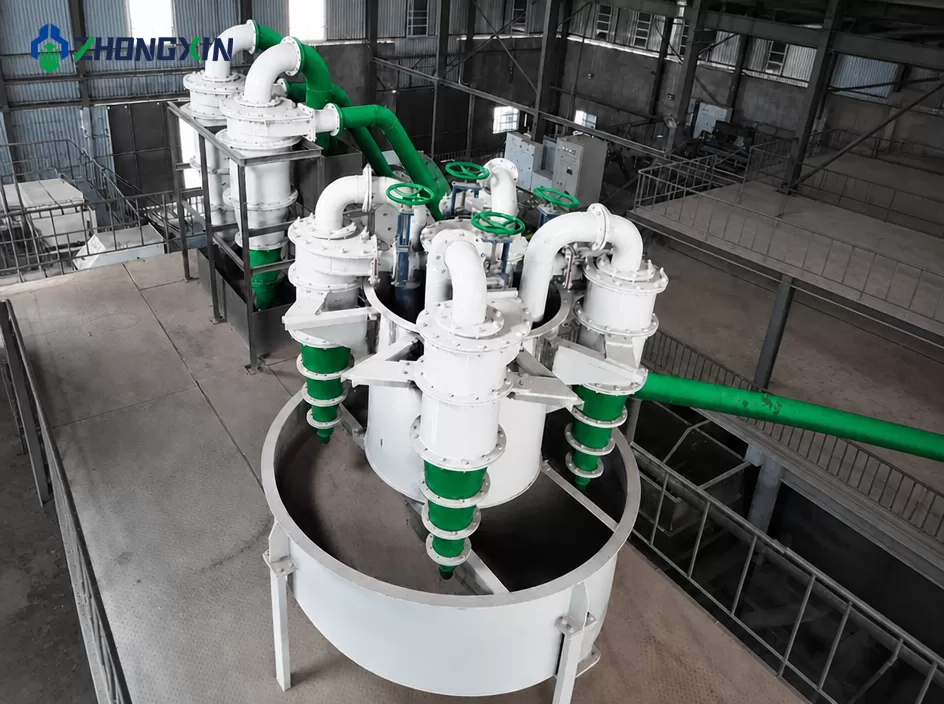
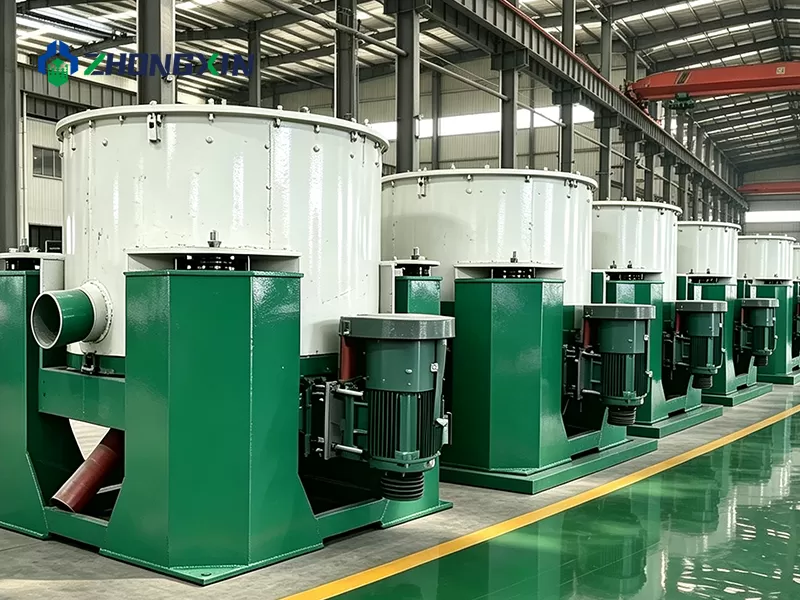
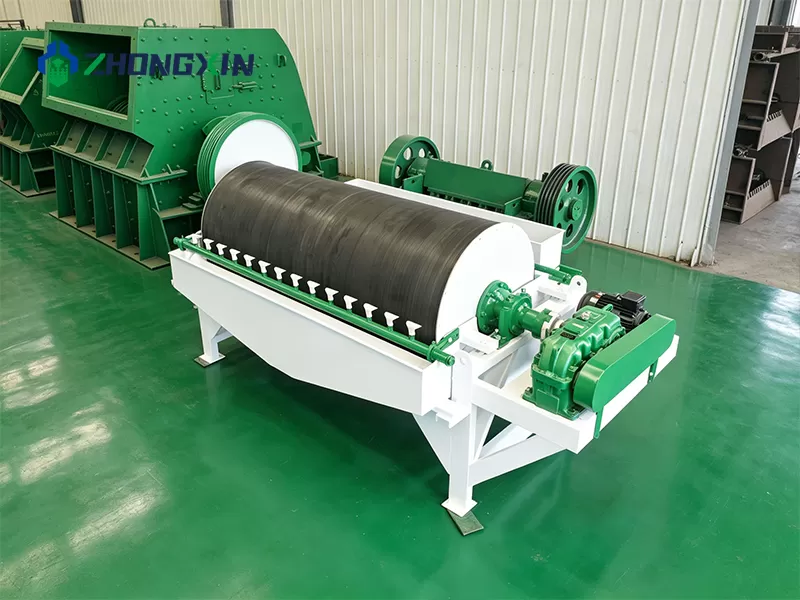
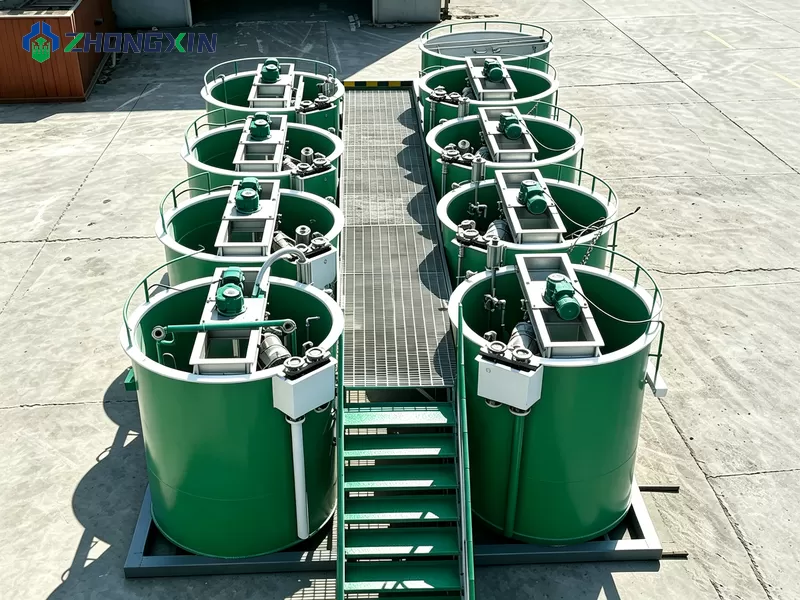
Optimize your mineral beneficiation circuit with our high-recovery mineral processing equipment. We manufacture heavy-duty grinding ball mills, spiral classifiers, hydrocyclones, froth flotation machines, and magnetic separators designed for processing gold, copper, iron, and manganese ores. Engineered for continuous duty and maximum mineral extraction efficiency, our machinery ensures reduced wear, lower power consumption, and improved concentrate grades across all hard-rock mining operations.
Discover custom-engineered mineral processing lines and complete aggregate production plant solutions tailored to your capacity and ore characteristics. From turnkey gold ore processing plants (CIP/CIL & flotation) and copper extraction lines to high-capacity sand-making and aggregate crushing circuits, we provide end-to-end flowsheets—integrating crushing, wet grinding, classification, and slurry dewatering. Partner with us for optimized plant layout design, factory-direct equipment supply, and maximum ROI.
This section is designed to address the most pressing inquiries customers may have regarding the daily operation, maintenance, product advantages, and after-sales service of our cone crushers. Our aim is to help you gain a comprehensive understanding of our overall capabilities and enable you to make informed decisions for your projects.
Choosing Zhongxin genuine wear parts reduces downtime and significantly boosts your mining operation's ROI.
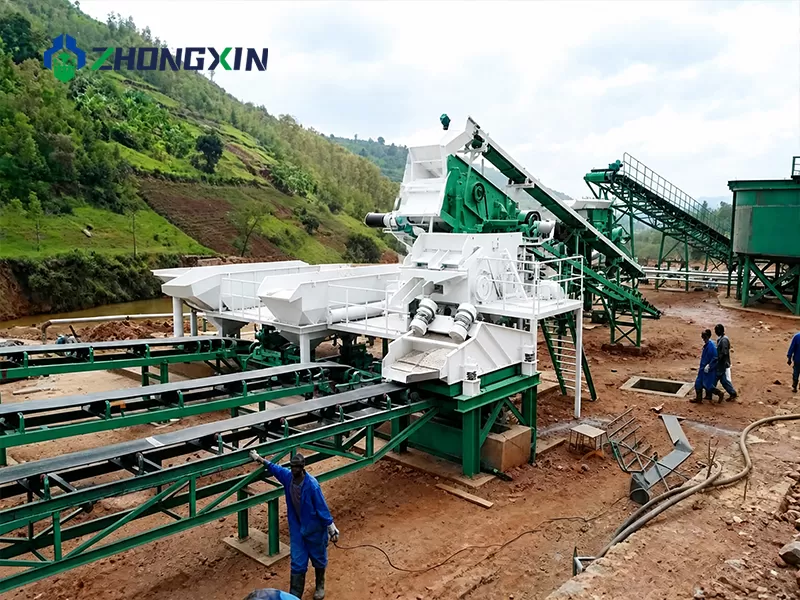

Before finalizing equipment selection, Zhongxin Heavy Industry offers laboratory-scale washability and gravity separation testing on representative run-of-mine manganese samples. By measuring clay content, liberation grain size, and density distribution, our mineral processing engineers determine exact trommel scrubber retention times, screen apertures, and jig stroke parameters—ensuring predictable Mn grade recovery before capital commitment.

To minimize civil delays and commissioning risks at remote mining sites, Zhongxin Heavy Industry provides detailed foundation load drawings, 3D plant layout blueprints, and electrical wiring diagrams prior to shipment. Experienced field engineers can be dispatched to supervise mechanical assembly, guide no-load and water-load test runs, and train local operators in jig bed adjustment, pump maintenance, and preventive inspection routines.

Continuous operation in abrasive silica and lateritic clay environments demands reliable consumable availability. Zhongxin Heavy Industry maintains ready-to-ship factory inventory of precision-fit OEM wear parts—including high-manganese steel jaw plates, heavy-duty trommel screen panels, anti-blinding polyurethane/steel vibrating screen meshes, reinforced jig rubber diaphragms, and high-chrome slurry pump impellers and liners—supported by consolidated sea freight or urgent air-cargo dispatch.