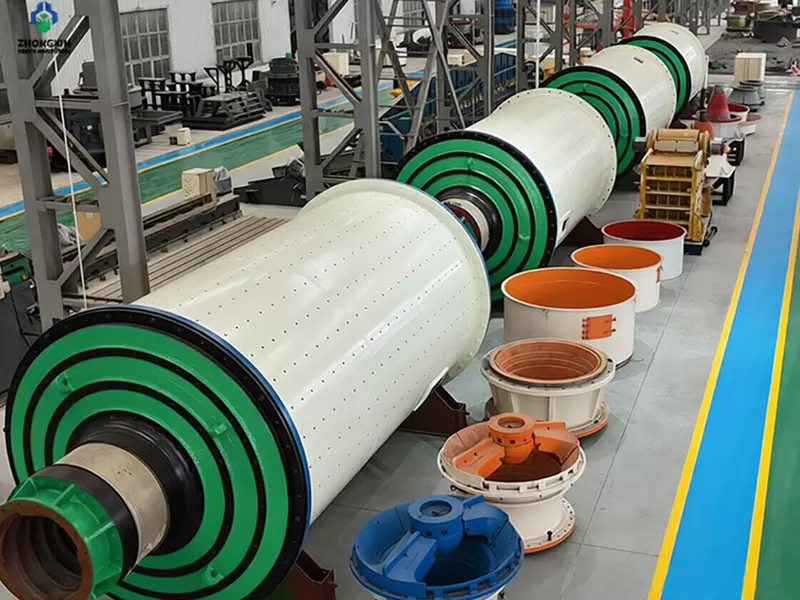
1. Structural Aspects:
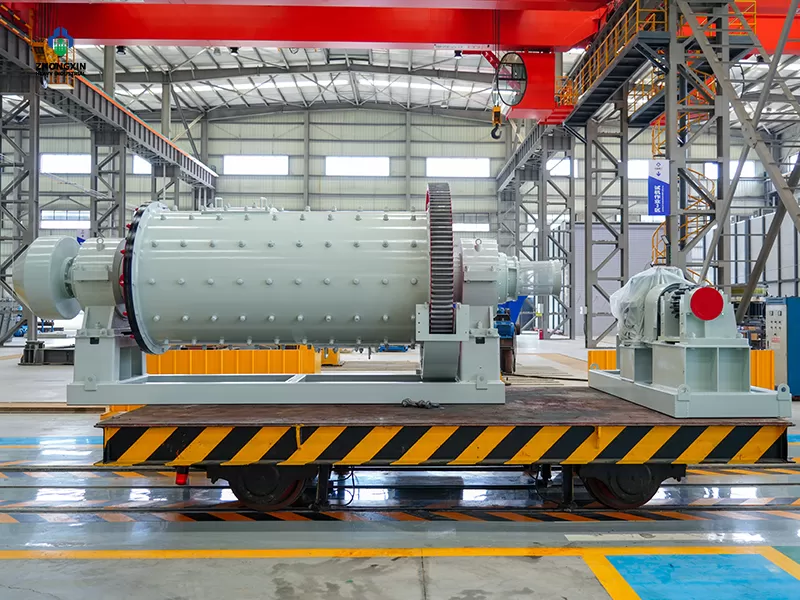
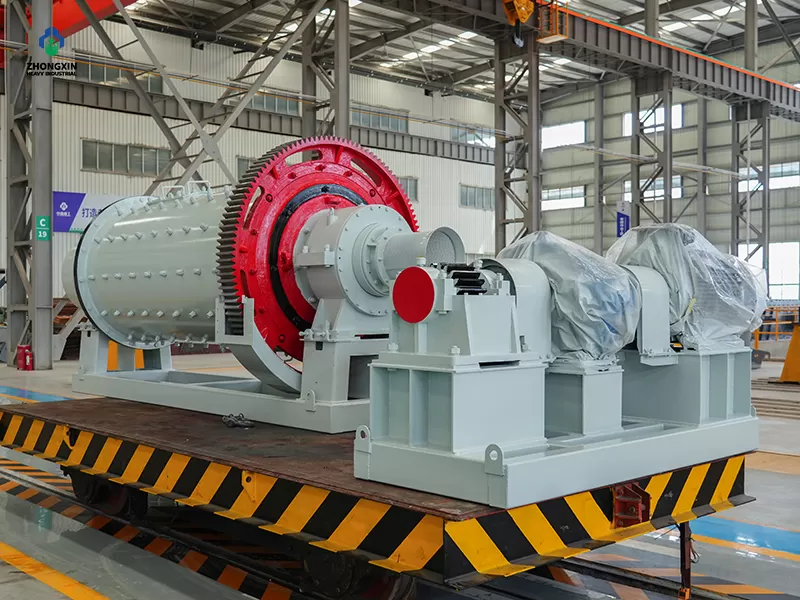
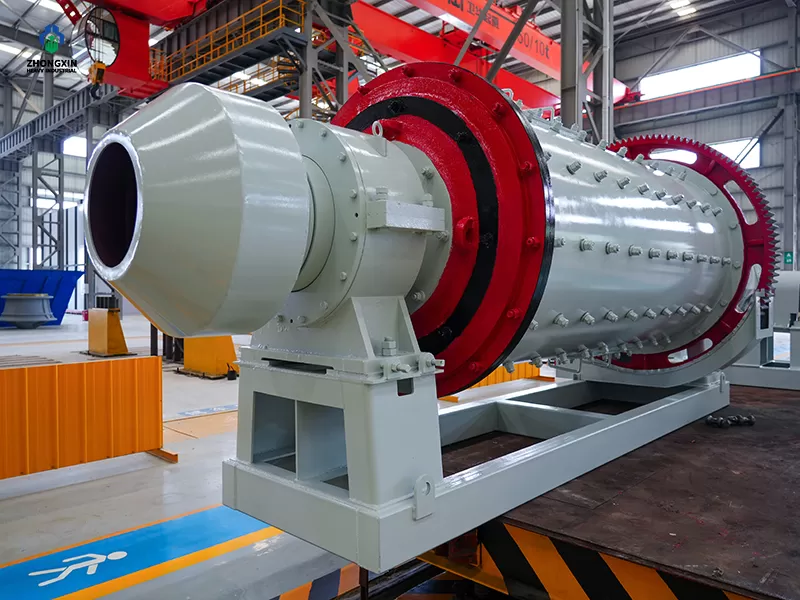
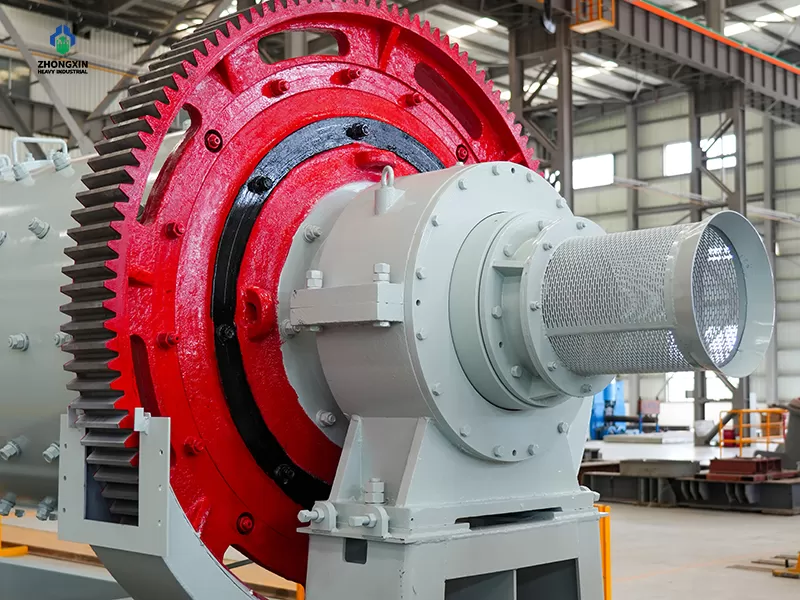
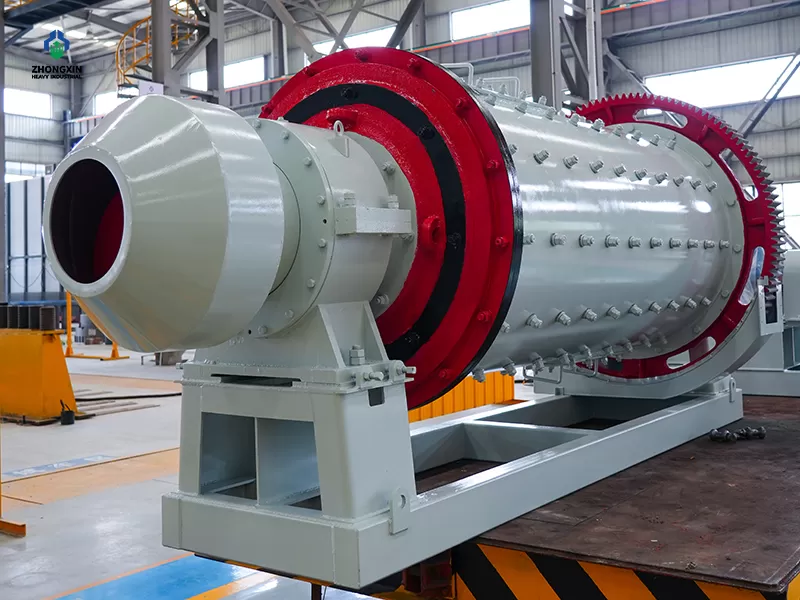
(1) Discharge Method: Wet ball mills can utilize overflow, grate, or peripheral discharge; wet rod mills primarily use overflow discharge but can also use peripheral discharge; dry ball mills mainly use grate or peripheral discharge; dry rod mills typically use only peripheral discharge.
(2) Internal Structure: To ensure the steel rods remain essentially parallel to the mill's axis during operation and to prevent rod tangling, the inner liners of the rod mill's feed and discharge end caps form a plane perpendicular to the cylinder; in contrast, the liners in ball mills are generally conical, though flat surfaces are also used.
2. Parameters and Performance:
To prevent interference between steel rods, rod mills generally operate at speeds of 65%–70% of the critical speed (nc); wet ball mills typically operate at 76%–88% of nc, while dry ball mills operate at 68%–76% of nc.nc: Critical speed of the mill;
3. Applications:
Because the contact between the grinding media (rods) and the material is linear, rod mills offer selective breakage and grinding, minimizing the risk of over-grinding; the upper limit of the discharge particle size is generally 1–3 mm, making them suitable for coarse grinding.
Compared to overflow-type ball mills, wet grate-type ball mills feature a discharge grate plate that actively lifts material for discharge; this results in a lower liquid level within the cylinder, a shorter material residence time, and a coarser discharge product. The upper limit of the discharge particle size for grate-type ball mills is generally 0.2–0.3 mm.
Wet Ball Mill vs Dry Ball Mill Specifications
| Technical Feature / Parameter | Wet Ball Mill | Dry Ball Mill |
| Working Principle | Materials are ground with water or liquid to form slurry. | Materials must be completely dry before entering the mill. |
| Moisture Content | High moisture / liquid environment allowed. | Strictly ≤ 1% to ≤ 2% to prevent clogging. |
| Discharge Mechanism | Overflow type or Grate type (Slurry flow). | Grate type with air-assisted wind sweeping system. |
| Grinding Efficiency | Higher (20% - 30% higher than dry type). | Standard (Limited by material cushioning effect). |
| Particle Fineness | Finer and more uniform particle size distribution. | Slightly coarser (Fines may cushion the balls). |
| Energy Consumption | Low power consumption per ton of material. | Higher power consumption due to air transport systems. |
| Auxiliary Equipment | Slurry pumps, hydrocyclones, thickeners. | Dust collectors, cyclones, air classifiers, fans. |
| Wear of Grinding Media | Higher chemical corrosion + physical wear. | Pure mechanical wear (No corrosion). |
| Environmental Control | No dust pollution, easy management on site. | Generates dust; requires high-quality air filtration. |
| Best Application Fields | Mineral Processing, gold/copper ore dressing, metal mining. | Cement production, ceramics, chemicals, fireproof materials. |
Whether you are looking for a heavy-duty cement ball mill for industrial manufacturing, a wet ball mill for mineral processing, or a small ball mill for pilot testing, Zhongxin is your premier ball mill machine manufacturer. Our industrial ball grinding mill series is engineered for durability and efficiency. Contact us to get the latest ball mill price list and upgrade your ball mill plant grinder system today. Get Ball Mill For Sale Details & Price List!
 Русский
 中文
中文 España
 English
 Tiếng Việt
 wa
wa WeChat